الخميس، 21 نوفمبر 2024

Day45


Source Transformation Technique (Voltage Source to Current Source & Current Source to Voltage Source)

What Is Source Transformation

Contents

💡
Key learnings:
  • Source Transformation Definition: Source transformation is defined as a technique to simplify circuit analysis by converting between equivalent voltage and current sources using Thévenin’s and Norton’s theorems.
  • Voltage to Current Conversion: This conversion involves calculating the current supplied by a shorted voltage source and connecting the same resistance across the current source.
  • Current to Voltage Conversion: Converts a current source into a voltage source by applying Ohm’s law to determine the voltage across an open circuit.
  • Circuit Simplification: Source transformation allows easier analysis and understanding of complex circuits by changing the type of sources without altering electrical behavior.
  • Educational Resources: Additional learning materials, like video explanations, are available for those who prefer visual or auditory learning methods.

What is a Source Transformation?

An electrical source transformation (or just ”source transformation”) is a method for simplifying circuits by replacing a voltage source with its equivalent current source, or a current source with its equivalent voltage source. Source transformations are implemented using Thévenin’s theorem and Norton’s theorem.

Source transformation is a technique used to simplify an electric circuit.

We’ll illustrate how this is done with an example.

Let’s take a simple voltage source along with a resistance connected in series with it.

The series resistance in the diagram models the internal resistance typical of practical voltage sources.

voltage source

Now, let us short circuit the output terminals of the voltage source circuit as shown below,

voltage source circuit
Ezoic

Applying Kirchhoff Voltage Law to the above circuit yields:

Where, I is the current delivers by the voltage source when it is short circuited.

Now, let’s take a current source of the same current I which produces same open-circuit voltage at its open terminals as shown below,

open terminals circuit

Now, applying Kirchhoff Current Law at node 1, of the above circuit, we get,

From equation (i) and (ii) we get,

The open circuit voltage of both the sources is V and short circuit current of both sources is I. The same resistance connected in series in voltage source is connected in parallel in its equivalent current source.

So, these voltage source and current source are equivalent to each other.

equivalent voltage source

A current source is dual form of a voltage source and a voltage source is dual form of a current source.

A voltage source can be converted into an equivalent current source and a current source can also be converted into an equivalent voltage source.

If you’d prefer a video explanation on current to voltage source conversion, take a look at the video below:

Voltage Source to Current Source Conversion

Consider a voltage source with a terminal voltage V and internal resistance r, placed in series. The current it supplies equals:

when the source of the terminals are shorted.

This current is supplied by the equivalent current source and the same resistance r will be connected across the source. The voltage source to current source conversion is shown in the following figure.

voltage to current source transformation

Current Source to Voltage Source Conversion

Similarly, assume a current source with the value I and internal resistance r. Now according to the Ohm’s law, the voltage across the source can be calculated as

Ezoic

Thus, the voltage across the source, when its terminals are open, is V.

current to voltage source transformation

Day 44

Superposition Analysis 

What is Superposition Theorem?

The Superposition Theorem is used to solve complex networks with a number of energy sources. It is an important concept to determine voltage and current across the elements by calculating the effect of each source individually. And combine the effect of all sources to get the actual voltage and current of the circuit element.

Superposition theorem states that;

“In any linear bilateral network having a greater number of sources, the response (voltage and current) in any element is equal to the summation of all responses caused by individual source acting alone. While other sources are eliminated from the circuit.”

In other words, we will consider only one independent source acting at a time. So, we need to remove other sources. The voltage sources are short-circuited and the current sources are open-circuited for ideal sources. If the internal resistance of sources is given, you need to consider the circuit.

The superposition theorem is only applied to the circuit which follows Ohm’s law.

When to Use the Superposition Theorem?

The network must follow the below requirements to apply the superposition theorem.

  • The components used in the circuit must be linear. It means, for resistors, the flow of current is proportional to the voltage; for inductors, the flux linkage is proportional to current. Therefore, the resistor, inductor, and capacitor are linear elements. But the diodetransistor is not a linear element.
  • The circuit components must be bilateral elements. It means, the magnitude of the current is independent of the polarity of energy sources.
  • With the help of the superposition theorem, we can find the current passes through an element, voltage-drop of resistance, and node voltage. But we cannot find the power dissipated from the element.

Steps to Follow for Superposition Theorem

Step-1 Find out a number of independent sources available in the network.

Step-2 Choose any one source and eliminate all other sources. If the network consists of any dependent source, you cannot eliminate it. It remains as it is throughout the calculation.

If you have considered all energy sources are ideal sources, you need not consider internal resistance. And directly short-circuit voltage source and open-circuit current source. But in case, if internal resistance of sources is given, you have to replace internal resistance.

Step-3 Now, in a circuit, only one independent energy source is present. You need to find a response with only one energy source in the circuit.

Step-4 Repeat step-2 and 3 for all energy sources available in the network. If there are three independent sources, you need to repeat these steps three times. And every time you get some value of the response.

Step-5 Now, combine all responses by algebraic summation obtained by individual sources. And you will get a final value of response for a particular element of a network. If you need to find a response for other elements, you need to follows these steps again for that element.

Superposition Theorem Solved Example

Example:

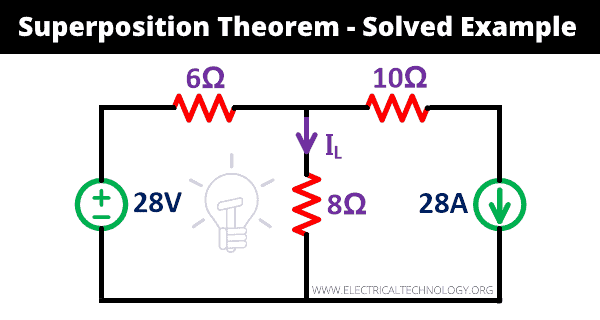
Let’s understand the working of the superposition theorem by example. Find the current (IL) passes through the 8Ω resister in the given network using the superposition theorem.

Superposition Theorem - Step by Step Procedure with Solved Examples

Solution:

Step-1 As shown in the above network, one voltage source, and one current source is given. Therefore, we need to repeat the procedure two times.

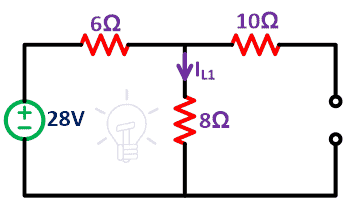
Step-2 First we consider 28V voltage source is present in the network. So, you need to remove the current source by open-circuited terminals. As here, we consider the current source as an ideal current source. So, we need not connect the internal resistance.

The remaining circuit is as shown in the below figure.

Step-3 Find the current (IL1) passes through 8Ω resister. It gives the effect only of a voltage source.

Due to the open circuit of a current source, no current passes through the 10Ω resister. So, the network consists of only one loop.

Apply KVL to the loop;

28 = 6IL1 + 8IL1

28 = 14IL1

IL1 = 28/14


الأربعاء، 20 نوفمبر 2024

Day 43

 Magnetic Field 


Magnetic fields are used throughout modern technology, particularly in electrical engineering and electromechanics. Rotating magnetic fields are used in both electric motors and generators. The interaction of magnetic fields in electric devices such as transformers is conceptualized and investigated as magnetic circuits. Magnetic forces give information about the charge carriers in a material through the Hall effect. The Earth produces its own magnetic field, which shields the Earth's ozone layer from the solar wind and is important in navigation using a compass.

الثلاثاء، 19 نوفمبر 2024

Day 42

Electric Current And Resistance


Electricity Basics

When beginning to explore the world of electricity and electronics, it is vital to start by understanding the basics of voltage, current, and resistance. These are the three basic building blocks required to manipulate and utilize electricity. At first, these concepts can be difficult to understand because we cannot "see" them. One cannot see with the naked eye the energy flowing through a wire or the voltage of a battery sitting on a table. Even the lightning in the sky, while visible, is not truly the energy exchange happening from the clouds to the earth, but a reaction in the air to the energy passing through it. In order to detect this energy transfer, we must use measurement tools such as multimeters, spectrum analyzers, and oscilloscopes to visualize what is happening with the charge in a system. Fear not, however, this tutorial will give you the basic understanding of voltage, current, and resistance and how the three relate to each other.

alt text

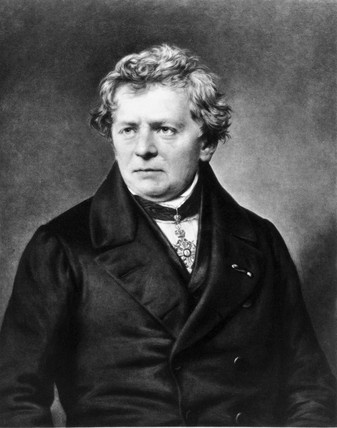
Georg Ohm

Covered in this Tutorial

  • How electrical charge relates to voltage, current, and resistance.
  • What voltage, current, and resistance are.
  • What Ohm's Law is and how to use it to understand electricity.
  • A simple experiment to demonstrate these concepts.

Suggested Reading


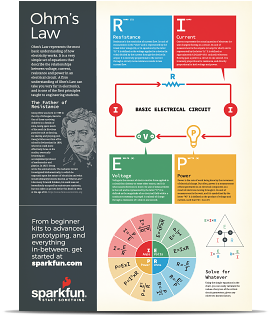
Ohm's Law Reference Guide

Get a high resolution reference guide to Ohm's Law!

Give your classroom, office, or workspace a quick way to reference the relationship between voltage, current and resistance.

Would you also like to subscribe to our weekly newsletter?


Electrical Charge

Electricity is the movement of electrons. Electrons create charge, which we can harness to do work. Your lightbulb, your stereo, your phone, etc., are all harnessing the movement of the electrons in order to do work. They all operate using the same basic power source: the movement of electrons.

The three basic principles for this tutorial can be explained using electrons, or more specifically, the charge they create:

  • Voltage is the difference in charge between two points.
  • Current is the rate at which charge is flowing.
  • Resistance is a material's tendency to resist the flow of charge (current).

So, when we talk about these values, we're really describing the movement of charge, and thus, the behavior of electrons. A circuit is a closed loop that allows charge to move from one place to another. Components in the circuit allow us to control this charge and use it to do work.

Georg Ohm was a Bavarian scientist who studied electricity. Ohm starts by describing a unit of resistance that is defined by current and voltage. So, let's start with voltage and go from there.


We define voltage as the amount of potential energy between two points on a circuit. One point has more charge than another. This difference in charge between the two points is called voltage. It is measured in volts, which, technically, is the potential energy difference between two points that will impart one joule of energy per coulomb of charge that passes through it (don't panic if this makes no sense, all will be explained). The unit "volt" is named after the Italian physicist Alessandro Volta who invented what is considered the first chemical battery. Voltage is represented in equations and schematics by the letter "V".

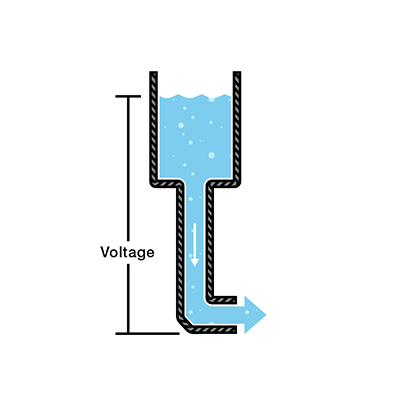
When describing voltage, current, and resistance, a common analogy is a water tank. In this analogy, charge is represented by the water amount, voltage is represented by the water pressure, and current is represented by the water flow. So for this analogy, remember:

  • Water = Charge
  • Pressure = Voltage
  • Flow = Current

Consider a water tank at a certain height above the ground. At the bottom of this tank there is a hose.

Voltage is like the pressure created by the water.

The pressure at the end of the hose can represent voltage. The water in the tank represents charge. The more water in the tank, the higher the charge, the more pressure is measured at the end of the hose.

We can think of this tank as a battery, a place where we store a certain amount of energy and then release it. If we drain our tank a certain amount, the pressure created at the end of the hose goes down. We can think of this as decreasing voltage, like when a flashlight gets dimmer as the batteries run down. There is also a decrease in the amount of water that will flow through the hose. Less pressure means less water is flowing, which brings us to current.


Day45

  Source Transformation Technique (Voltage Source to Current Source & Current Source to Voltage Source) May 8, 2024   by  Electrical4U C...